The Sun, the Sand, and the Smart Move: Navigating the Mobile Housing Revolution in Coastal Florida

The Dream of the Salt Life is Changing
Picture this: you wake up to the gentle sound of palm fronds rustling in the breeze. The air carries that unmistakable scent of salt and humidity that defines life on the Florida coast. You walk out onto your expansive porch, coffee in hand, looking out at a community filled with manicured lawns and friendly neighbors. In the past, this coastal dream usually came with a million-dollar price tag or a cramped, aging condominium. But today, a new trend is sweeping across the Sunshine State from the Emerald Coast to the Florida Keys. Mobile and manufactured housing is no longer just a budget-friendly alternative; it has become the gold standard for stylish, resilient, and community-focused coastal living.
SUBMIT YOUR DETAILS FOR
For decades, there was a stigma attached to the term “trailer park.” However, if you step into a modern coastal manufactured home today, you likely wouldn’t recognize it as such. We are witnessing a literal and figurative elevation of the industry. As traditional real estate prices skyrocket, a diverse group of people—from tech-savvy remote workers to active retirees—are turning toward mobile housing as a way to secure their piece of paradise without the crushing weight of a traditional mortgage. Let’s dive into the trends that are reshaping the shoreline of Florida.
The Evolution of Coastal Chic Design
The biggest shift in Florida’s mobile housing market is the aesthetic transformation. Gone are the days of wood-paneled walls and narrow, dark hallways. The modern manufactured homes appearing along the Gulf and Atlantic coasts are masterpieces of “Coastal Chic” design. Open-concept floor plans are now the standard, allowing the natural Florida sunlight to flood the living spaces.
Homebuilders are leaning heavily into light, airy palettes—think sandy beiges, soft teals, and crisp whites. High-end finishes that were once reserved for custom-built mansions are now common features iew mobile units. We are talking about quartz countertops, stainless steel appliances, and luxury vinyl plank flooring that can withstand the sand and moisture of the beach. Vaulted ceilings and large impact-resistant windows are also high on the list of trends, making these homes feel far more spacious than their square footage suggests.
Outdoor Living as a Priority
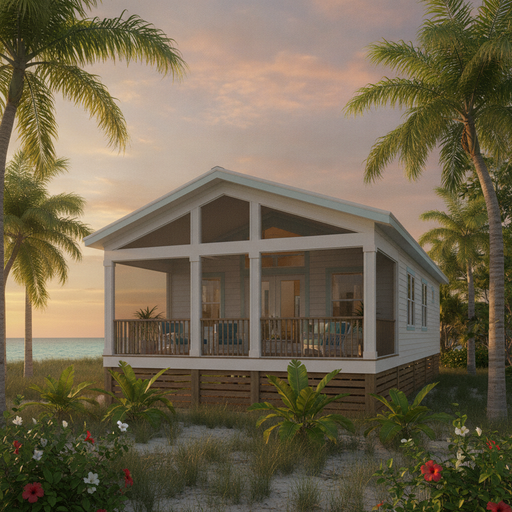
In coastal Florida, your backyard (or front porch) is your primary living room. The latest trend in mobile housing focuses on seamless indoor-outdoor transitions. We are seeing a surge in homes featuring expansive “Lanai” style porches, many of which are screened-in to offer protection from the Florida sun and bugs while still inviting the breeze. Some high-end mobile home communities are even incorporating rooftop decks, offering views of the Intracoastal Waterway or the Gulf of Mexico—a luxury once reserved for multi-million dollar beachfront estates.
Resilience in the Face of the Storm
One caot talk about housing in Florida without discussing hurricanes. A major trend—and a necessity—is the incredible advancement in structural engineering for manufactured homes. Modern mobile homes in coastal Florida are built to meet or exceed rigorous HUD codes, specifically those for Wind Zone 3, which is the highest rating for wind resistance.
These aren’t the homes of the 1970s. Today’s units are anchored with sophisticated systems that keep them secure during high-wind events. Furthermore, we are seeing a trend toward “stilt-style” manufactured housing. By elevating the home on reinforced concrete or steel pillars, homeowners can mitigate flood risks while creating valuable shaded space underneath for parking, storage, or even a tiki bar. This blend of safety and functionality is a key driver for the renewed interest in coastal mobile communities.
The Rise of the “Luxury” Mobile Home Community
Perhaps the most fascinating trend is the evolution of the parks themselves. In the past, mobile home parks were often seen as transitional spaces. Today, they are being rebranded as “Lifestyle Resorts.” These communities are leaning into the amenities that rival high-end country clubs. We are talking about heated salt-water pools, pickleball courts (the hottest trend in Florida athletics), dog parks with wash stations, and community centers that host everything from yoga classes to sunset cocktail hours.
There is also a growing distinction between “Land-Lease” and “Land-Owned” communities. While land-lease options remain popular for their lower entry price, there is a significant trend toward residents buying the land beneath their homes. This shift gives homeowners more control, better long-term appreciation, and a deeper sense of permanence in their coastal neighborhoods.
The Demographics: Who is Buying?
The face of the Florida mobile homeowner is changing. While the “55+ active adult” demographic remains a powerhouse, we are seeing a surge in younger buyers. Why? Because the “Work from Anywhere” culture has hit the Florida coast. A digital nomad caow purchase a high-end manufactured home for a fraction of the cost of a condo, set up a home office with a view of the palms, and spend their lunch break surfing or paddleboarding.
Additionally, the “Missing Middle” of the housing market—teachers, nurses, and local business owners—are finding that mobile housing is the only viable way to stay near the coast where they work. This diversification is creating more vibrant, multi-generational communities that feel less like retirement enclaves and more like traditional neighborhoods.
Sustainability and the Green Movement
As we become more conscious of our environmental footprint, the manufactured housing industry is keeping pace. New homes are increasingly being outfitted with energy-efficient insulation, LED lighting, and smart thermostats. Because these homes are built in climate-controlled factories, there is significantly less construction waste compared to site-built homes. In Florida, where air conditioning is a non-negotiable expense, the energy efficiency of a modern mobile home can lead to hundreds of dollars in savings every year, making it a sustainable choice for both the planet and the wallet.
Navigating the Investment Potential
Is a mobile home in coastal Florida a good investment? Historically, the answer was complicated, but today’s trends suggest a resounding “yes” for many. As traditional housing inventory remains low and prices remain high, well-maintained manufactured homes in desirable coastal locations are appreciating at rates never seen before. Investors are also taking note, purchasing older units and “flipping” them with modern coastal aesthetics to meet the high demand for turnkey beach retreats.
Conclusion: A New Chapter for the Coast
The mobile housing trend in coastal Florida is a reflection of a larger cultural shift. People are prioritizing lifestyle over square footage and experiences over debt. By embracing modern technology, elegant design, and community-focused living, the manufactured housing industry has cracked the code for affordable luxury at the water’s edge.
Whether you are looking for a permanent residence to spend your golden years or a stylish home base for your remote work adventures, the coastal mobile homes of Florida offer a unique opportunity. They prove that you don’t need a mansion to live like royalty. All you need is a well-designed space, a view of the sunset, and the peace of mind that comes with making a smart, sustainable housing choice in one of the most beautiful places on Earth.