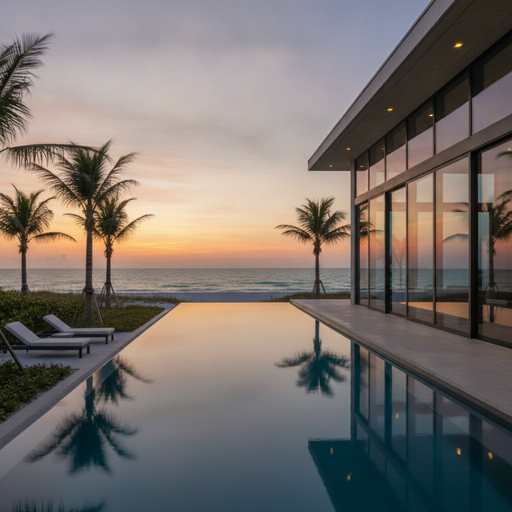

The Eternal Allure of the Salt Air
Imagine waking up to the sound of rhythmic waves crashing against the shore, the smell of salt air wafting through your window, and a golden sunrise painting the Atlantic horizon. For Sarah and Mark, a couple who spent twenty years in the bustling, gray corridors of Chicago, this wasn’t just a vacation dream—it was the goal. Like thousands of others, they found themselves scrolling through real estate listings during a particularly harsh winter, eventually joining the massive wave of migration toward the Florida shoreline.
SUBMIT YOUR DETAILS FOR
Florida’s coastline has always held a mythical status in the American psyche. It represents the ultimate reward for a life of hard work. However, in recent years, the demand for housing along these shores has shifted from a steady stream to a tidal wave. Despite rising interest rates, fluctuating insurance landscapes, and the complexities of coastal climate change, the desire to own a piece of the Sunshine State’s perimeter has never been more intense. To understand why this demand remains so resilient, we have to look beneath the surface of the postcard-perfect views.
The Great Migration and the Remote Work Revolution
For decades, Florida was primarily seen as the “waiting room” for retirement. While retirees still make up a significant portion of the buyer pool, the demographic has shifted dramatically. The catalyst? A fundamental change in how we work. When the world shifted to remote and hybrid models, the tether to cold-weather metropolitan hubs was finally severed.
If you can join a Zoom call from anywhere, why wouldn’t you do it from a balcony overlooking the Gulf of Mexico? This “work-from-beach” lifestyle has brought a younger, wealthier demographic to the shoreline. These buyers aren’t just looking for two-bedroom condos; they are looking for primary residences with home offices, high-speed coectivity, and proximity to the coastal amenities that were once reserved for two-week summer holidays.
Economic Incentives Beyond the Beach
While the aesthetic appeal of the shoreline is the primary hook, the financial hooks are equally sharp. Florida remains one of the few states in the U.S. without a state income tax. For high earners moving from places like New York, New Jersey, or California, the “tax savings” alone can often cover a significant portion of a coastal mortgage.
Furthermore, Florida’s pro-business environment has encouraged corporate relocations. As tech and finance firms open offices in Miami, Tampa, and West Palm Beach, employees follow. This influx of high-paying jobs creates a localized demand that keeps the housing market insulated from some of the broader national cooling trends. When the workplace moves to the coast, the housing demand follows suit, creating a competitive environment where shoreline properties are seen as blue-chip investments.
The Inventory Squeeze: A Scarcity of Sand
One of the most basic principles of economics is driving the Florida shoreline market: scarcity. They aren’t making any more coastline. In popular areas like Naples, Sarasota, and the Gold Coast, buildable land is virtually non-existent. Most “new” developments are actually redevelopments—tearing down older, smaller homes to build modern, storm-resistant luxury estates.
This lack of inventory creates a persistent “seller’s market.” Even as the number of transactions might fluctuate month-to-month, the price floor remains incredibly firm. Buyers aren’t just competing with each other; they are competing with a finite amount of geography. This scarcity ensures that shoreline property remains a status symbol and a store of value, further fueling the demand among those who can afford the entry price.
The Resilience Factor: Living with the Elements
It is impossible to talk about Florida shoreline housing without addressing the elephant in the room: hurricanes and rising sea levels. Critics often wonder why demand remains high despite the increasing costs of property insurance and the physical risks of coastal living. The answer lies in a combination of human psychology and modern engineering.
- Advanced Building Codes: Modern homes on the Florida coast are built like fortresses. From high-impact windows to elevated foundations and reinforced concrete, these structures are designed to withstand significant weather events. Buyers feel a sense of security iew construction that wasn’t present thirty years ago.
- The Lifestyle Premium: For many, the “risk” is a calculated trade-off. The psychological benefit of living by the water, the outdoor lifestyle, and the health perks of a suy climate outweigh the aual anxiety of hurricane season.
- Insurance Evolution: While the insurance market has been volatile, recent legislative reforms in Florida are aimed at stabilizing the industry. Buyers are becoming more educated, looking for homes with “hardened” features that lower their premiums, rather than shying away from the coast entirely.
Regional Hotspots: Where the Demand is Surging
The demand isn’t uniform across the state; it moves in pockets, each offering a different flavor of coastal living. Understanding these regions helps explain the diverse nature of the buyers.
The Emerald Coast (Panhandle)
Known for its sugar-white sand and turquoise waters, the Panhandle has seen a massive surge in demand from buyers in the Southeast and Midwest. Places like 30A have become luxury destinations that rival the Hamptons, characterized by plaed communities and a family-oriented atmosphere.
The Cultural Hub (South Florida)
Miami and Fort Lauderdale continue to be the magnets for international capital and high-octane lifestyle seekers. Here, the demand is driven by a mix of luxury high-rises and exclusive waterfront estates. It’s not just about the beach; it’s about the art, the dining, and the global coectivity.
The Gulf Coast Growth (Tampa to Naples)
The West Coast of Florida offers a slightly more relaxed pace but with explosive growth. Tampa’s urban waterfront revitalization and Naples’ reputation for ultra-luxury retirement have created a corridor of demand that shows no signs of slowing down, even as prices reach record highs.
The Investment Perspective: Short-Term Rentals and Equity
Many buyers are not just looking for a home; they are looking for an asset. The Florida shoreline is one of the most lucrative markets for short-term vacation rentals. Investors are drawn to the “high-season” yields that coastal properties can generate through platforms like Airbnb and VRBO. This investor demand adds another layer of competition for residential buyers, as a single property can often serve as both a personal vacation home and a revenue-generating business.
Furthermore, the long-term equity growth in Florida coastal real estate has historically outperformed many other asset classes. For many, a house on the Florida shoreline is seen as a “safe haven” for capital, especially during times of inflationary pressure.
Looking Ahead: The Future of Florida Shorelines
Is the demand sustainable? While the frenetic pace of the 2021-2022 market has normalized, the underlying drivers remain. People still want to be warm. They still want to be by the water. And they still want to live in a state that offers significant financial advantages.
The future will likely see a “flight to quality.” Demand will increasingly gravitate toward homes that are sustainably built and located in communities with robust infrastructure. We may see a shift where “inland-coastal” properties—homes that are a few miles from the beach but still offer the lifestyle—become more popular as price points on the direct waterfront become unreachable for the middle class.
Conclusion: The Irresistible Draw
The story of Florida shoreline housing demand is more than just a tale of real estate statistics and mortgage rates. It is a story about the American dream evolving. It’s about the pursuit of a lifestyle that prioritizes wellness, sunshine, and a coection to nature. As Sarah and Mark found out when they finally moved into their coastal home, there is a certain magic in the Florida tide that numbers can’t quite capture.
As long as the sun shines and the waves roll in, the Florida shoreline will continue to be one of the most coveted pieces of real estate on the planet. The challenges of climate and cost are real, but for those who have tasted the salt air, the demand is—and likely always will be—unstoppable.