From Blueprint to Beauty: The Ultimate Guide to Planning Your Custom Home Exterior Budget Without Breaking the Bank

The Dream That Lives Outside Your Front Door
Meet Sarah and James. After years of saving and months of browsing floor plans, they were finally ready to build their custom dream home. They spent hours debating the kitchen island’s marble veining and the exact shade of hardwood for the living room. But when they received the first quote for the exterior—the siding, the roof, the landscaping, and the lighting—they were hit with a sudden realization: they had spent so much time dreaming about what was inside that they hadn’t properly prepared for what the world would actually see.
SUBMIT YOUR DETAILS FOR
Plaing the budget for a custom home exterior is often more complex than the interior. It isn’t just about aesthetics; it is about protection, durability, and that elusive “curb appeal” that defines your home’s personality. If you find yourself in Sarah and James’s shoes, don’t panic. Budgeting for your home’s exterior doesn’t have to be a source of stress. With a clear roadmap and a bit of storytelling, you can create a stuing facade that fits your financial goals.
Understanding the Pillars of Exterior Costs
Before you start picking out paint swatches, you need to understand where the bulk of your money will go. Think of your exterior budget as a tripod: Materials, Labor, and the “Invisible” essentials. If one leg is weak, the whole project can feel off-balance.
1. Siding and Cladding: The Skin of Your Home
Siding is usually the largest expense in an exterior budget because it covers the most surface area. The choices you make here will dictate your maintenance schedule for the next twenty years. Vinyl is budget-friendly but may lack the premium feel some custom builders desire. Fiber cement (like Hardie Board) offers a middle ground of durability and aesthetics. If you’re dreaming of natural stone or high-end cedar, you’ll need to allocate a significantly larger portion of your budget—sometimes triple the cost of standard options.
2. The Roof: Your Home’s First Line of Defense
The roof isn’t just a lid; it’s a statement. While asphalt shingles are the standard for a reason (they are cost-effective and reliable), custom homes often lean toward metal roofing or clay tiles. These materials carry a higher price tag upfront but offer incredible longevity and energy efficiency. When plaing this part of your budget, remember to factor in the complexity of your roofline. A roof with multiple gables and steep pitches will cost much more in labor than a simple flat or sloped design.
3. Windows and Doors: The Eyes to the Soul
Large, floor-to-ceiling windows are a staple of modern custom homes, but they are also a major budget item. Beyond the cost of the glass, you must consider the framing material—vinyl, wood, or aluminum—and the energy efficiency ratings. A custom front door can also range from a few hundred dollars to several thousand. It’s the focal point of your home’s entrance, so many homeowners choose to “splurge” here while keeping window designs more uniform to save costs.
The Hidden Costs You Didn’t See Coming
Every story has a plot twist, and in home building, that twist usually comes in the form of “soft costs” and site preparation. Sarah and James were surprised to learn that before a single brick was laid, they had already spent thousands on things they couldn’t even see.
- Permits and Impact Fees: Depending on your location, local governments can charge substantial fees for the right to build. These aren’t negotiable and must be accounted for early.
- Grading and Drainage: Your lot might look flat, but proper water management is critical. If your land needs significant grading or a complex drainage system to prevent basement flooding, this can eat into your “pretty” budget (like landscaping) very quickly.
- Exterior Lighting and Electrical: Ruing power for soffit lights, security cameras, and landscape lighting requires professional electrical work that should be plaed during the framing stage, not as an afterthought.
The 20% Rule: Your Financial Safety Net
If there is one piece of advice every custom home builder should follow, it is the Contingency Fund. No matter how meticulously you plan, prices for lumber can spike, or a structural issue might be discovered during the build. Always set aside at least 20% of your total exterior budget for “just in case” scenarios. If you don’t use it, you have a head start on your furniture budget. If you do need it, it will keep your project from grinding to a halt.
Prioritizing Your Spend: Where to Splurge and Where to Save
Building a custom home is the art of compromise. Unless you have an unlimited budget, you will have to make choices. Here is a quick guide on how to prioritize:
Where to Splurge:
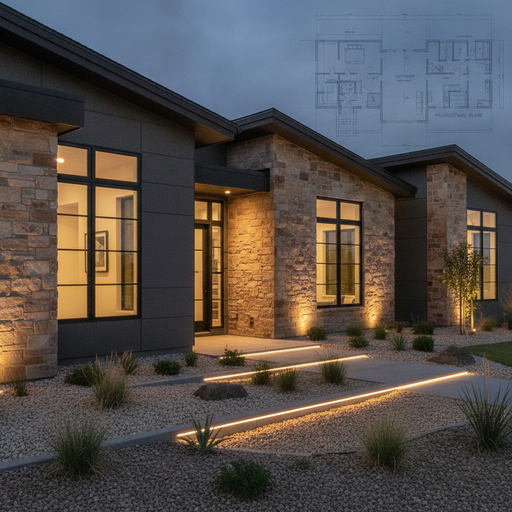
- The Front Facade: This is what people see. You can use premium materials like stone or high-end wood on the front of the house and transition to more affordable siding on the sides and back.
- Energy Efficiency: High-quality windows and insulation pay for themselves over time in reduced utility bills.
- The Front Door: It is the first thing guests touch. A heavy, high-quality door sets the tone for the entire home.
Where to Save:
- Landscaping: You don’t need a mature forest on day one. Budget for the “bones” (trees and shrubs) and add the decorative flowers and mulch beds over the next few years.
- Side and Rear Windows: Use standard sizes for windows that aren’t visible from the street. Custom-shaped glass is beautiful but exponentially more expensive.
- Secondary Materials: Use “look-alike” materials for high-up areas. For example, high-quality composite trim can look just like wood from a distance but requires zero maintenance.
Working with Your Contractor
Communication is the currency of a successful build. When discussing your exterior budget with a contractor, be honest about your “hard ceiling.” A good builder can offer value-engineering suggestions—ways to get the look you want using more cost-effective methods. Ask for “line-item” quotes so you can see exactly where the money is going. If the siding quote is too high, you can see it clearly and ask for alternative material options.
Conclusion: The Reward of a Well-Plaed Exterior
In the end, Sarah and James adjusted their plans. They chose a slightly less expensive siding for the back of the house, which allowed them to keep the stuing black-framed windows they loved in the front. By understanding their costs and plaing for the unexpected, they built a home that didn’t just look great—it felt like a smart investment.
Budgeting for a custom home exterior is a journey of balancing your “wants” with your “needs.” By focusing on the pillars of construction, accounting for hidden costs, and being strategic about where you spend your money, you can create a home that provides a warm welcome every time you pull into the driveway. Remember, the exterior is your home’s handshake with the world—make it a good one, but make sure it’s a handshake you can afford.