
The First Handshake of Your Home
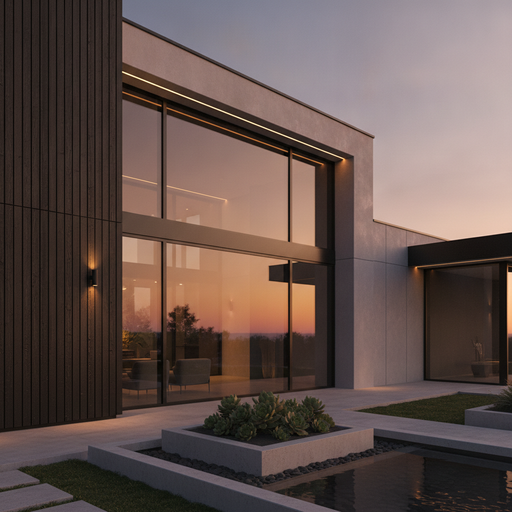
Imagine you are driving down a quiet suburban street at sunset. Most houses blend into a blur of beige siding and standard brick. But then, you see it. A residence that doesn’t just sit on the lot—it commands it. With a striking combination of charred wood, floor-to-ceiling glass, and strategic lighting, it tells a story before you even step through the front door. This is the power of a custom exterior facade. It is your home’s first handshake, its most public statement, and the ultimate expression of your personal style.
SUBMIT YOUR DETAILS FOR
For many homeowners, the exterior is an afterthought, often left to the whims of the original builder or the prevailing trends of the decade it was built in. However, shifting your perspective to see the facade as a canvas can completely transform your living experience. Whether you are building from scratch or plaing a massive renovation, custom design allows you to break free from the “cookie-cutter” mold and create something truly breathtaking.
The Rise of Modern Minimalism
In recent years, the trend toward minimalism has moved from the interior to the exterior. But modern minimalism isn’t just about white boxes; it’s about the “less is more” philosophy applied to texture and form. A custom minimalist facade often utilizes a monochromatic color palette—think deep charcoals, slate grays, and stark whites—complemented by high-quality materials.
One of the most popular ways to achieve this is through the use of large-format porcelain slabs or smooth cement render. By removing visible seams and busy details, the house takes on a sculptural quality. To prevent the design from feeling too cold, architects often introduce “warmth” through natural accents. A recessed entryway lined with warm oak or a single cantilevered balcony can provide the necessary contrast to make a minimalist home feel inviting rather than industrial.
Industrial Chic: Raw Materials in the Spotlight
If you lean toward a more rugged, urban aesthetic, the industrial-inspired facade might be your calling. This style celebrates materials that are usually hidden away. We are talking about exposed steel beams, reclaimed brick, and the mesmerizing patina of Corten steel.
The beauty of industrial design lies in its honesty. Imagine a facade that pairs red-clay bricks with black-framed Crittall windows. The contrast between the rough texture of the brick and the sleek, thin lines of the metal creates a visual tension that is incredibly sophisticated. For a truly custom touch, many designers are now using perforated metal screens. These screens don’t just look cool; they provide privacy and create a beautiful play of light and shadow inside the house during the day, while making the house glow like a lantern at night.
Biophilic Design: Bringing Nature to the Front Door
We live in a world that is increasingly digital and discoected from the outdoors. Perhaps that is why biophilic design—the practice of coecting buildings more closely to nature—is exploding in popularity. A custom facade inspired by nature does more than just look good; it creates a sense of tranquility.
How do you achieve this? It starts with the materials. Shou Sugi Ban, or charred cedar, is a traditional Japanese technique that is taking the architectural world by storm. The deep, silvery-black wood is not only naturally resistant to rot and fire but also provides a texture that is impossible to replicate with synthetic materials. Pairing this with vertical gardens or “living walls” integrated directly into the facade creates a home that breathes. Imagine coming home to a wall of lush ferns and jasmine that changes with the seasons. It turns a static building into a living, evolving piece of art.
The Marriage of Heritage and Contemporary Flair
One of the most challenging, yet rewarding, custom facade projects involves updating a historical or traditional home. You don’t always have to tear everything down to get a modern look. In fact, some of the most inspiring designs come from the “old meets new” approach.
Consider a classic stone cottage. By adding a modern glass-and-steel extension or replacing small, dated windows with expansive black-framed glass, you create a striking juxtaposition. The key here is respect. The new elements shouldn’t try to mimic the old; instead, they should highlight the beauty of the original structure through contrast. A custom glass walkway coecting two stone wings of a house, for example, creates a transparent transition that feels both futuristic and timeless.
Lighting: The Secret Ingredient of Curb Appeal
You can spend hundreds of thousands of dollars on premium stone and rare woods, but if your lighting is poor, your facade will disappear as soon as the sun goes down. Lighting is the “makeup” of architecture. It highlights textures, creates depth, and guides the eye to the architectural features you want to emphasize.
Custom lighting design should be layered. First, there is functional lighting—the lights that illuminate the path and the front door. Then, there is accent lighting. This involves grazing a textured stone wall with light to emphasize its roughness or using “uplighting” on a signature tree or a cantilevered roofline. Finally, consider integrated LED strips hidden in recessed joints or under stair treads. These subtle glows give the house a weightless, “floating” appearance that looks incredibly modern and high-end.
Choosing the Right Materials for Longevity
When designing a custom facade, it is easy to get caught up in the aesthetics, but durability is just as important. The exterior of your home is your first line of defense against the elements. A custom design should look just as good in ten years as it does on the day it is finished.
- Fiber Cement Siding: A versatile option that can mimic wood or stone but is virtually indestructible and fire-resistant.
- Natural Stone Veneer: Offers the timeless beauty of solid stone without the extreme weight and cost.
- Zinc and Copper: These metals develop a beautiful patina over time, meaning the house actually looks better as it ages.
- Engineered Wood: Provides the warmth of real timber but is treated to withstand moisture and insects without the heavy maintenance of natural wood.
Personalizing the Details
What truly makes a facade “custom” are the small details that reflect the people living inside. It’s the bespoke oversized pivot door made of reclaimed mahogany. It’s the custom-etched house number that is backlit with soft white light. It’s the choice of a specific gravel for the xeriscaped front garden that matches the stone on the walls.
Don’t be afraid to experiment with color in small doses. While the main body of the house might be a neutral earth tone, a vibrant teal front door or copper downspouts can add a pop of personality that makes the home feel uniquely yours. These details are the punctuation marks at the end of your architectural sentence.
The Financial Impact of a Great Facade
While the primary motivation for a custom facade is personal enjoyment, the financial benefits caot be ignored. Real estate experts consistently agree that curb appeal is one of the biggest factors in a home’s valuation. A custom-designed exterior doesn’t just make the neighbors jealous; it significantly increases the “perceived value” of the property. When a house looks high-end from the sidewalk, buyers are often willing to pay a premium before they even see the kitchen or the master bedroom.
Conclusion: Your Home, Your Masterpiece
Transforming your home’s exterior through a custom facade is a journey of self-expression. It is an opportunity to take the structural “bones” of a building and give them a soul. Whether you are drawn to the stark beauty of minimalism, the rugged charm of industrial materials, or the soft harmony of biophilic design, the goal is to create a space that makes you feel proud every time you turn into the driveway.
Remember, your home is more than just a shelter; it is a landmark in your personal history. By investing in a custom facade, you aren’t just renovating a building—you are crafting a masterpiece that will stand the test of time, welcoming you home with beauty and grace for years to come.