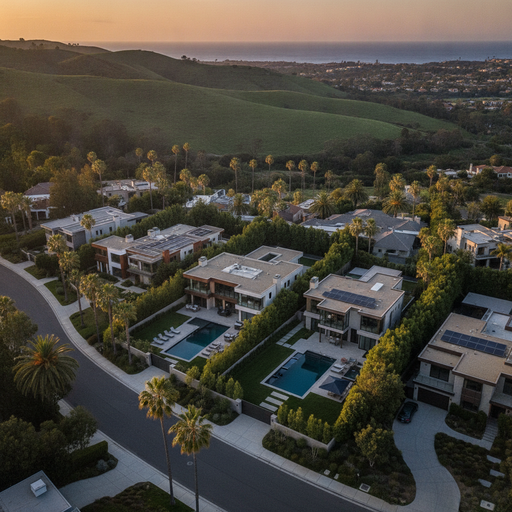
The California Dream: Understanding the Relentless Demand for Golden State Real Estate

The Paradox of the Golden State
Imagine standing on a sun-drenched balcony in Santa Monica, the salty breeze of the Pacific hitting your face, or walking through the tech-laden streets of Palo Alto where the future is being coded in real-time. For decades, California has been more than just a state; it has been a symbol of aspiration, a beacon of iovation, and a postcard of the perfect lifestyle. But if you have looked at a real estate listing lately, you might have noticed something startling. Despite the headlines about “exoduses” and high living costs, the demand for residential housing in California remains a towering giant that refuses to lean.
SUBMIT YOUR DETAILS FOR
Meet Sarah, a software engineer who recently moved to Orange County. She spent six months outbidding competitors, often losing to all-cash offers that were well above the asking price. “It felt like a marathon where the finish line kept moving,” she told me. Sarah’s story isn’t unique. It is the lived reality of millions of Californians. To understand why housing demand stays so high in the nation’s most populous state, we have to look past the price tags and dive into the unique ecosystem that makes California real estate some of the most coveted land on Earth.
An Economic Engine Like No Other
The primary driver of California’s housing demand is its sheer economic gravity. If California were a country, it would boast the fifth-largest economy in the world, outperforming nations like the United Kingdom and India. This isn’t just a statistic; it’s a magnet for talent. From the entertainment giants of Hollywood to the aerospace pioneers in the South Bay and the venture capital titans of Silicon Valley, the state offers a concentration of high-paying jobs that few places can replicate.
When high-income earners flock to a region, they don’t just bring their talent; they bring their purchasing power. This creates a ripple effect. A senior developer at a tech firm doesn’t just need a home; they want a home near their office, which drives up prices in the immediate vicinity. As those prices rise, the “next tier” of workers moves one suburb over, driving up demand there. This economic engine ensures that even when interest rates fluctuate, there is always a pool of ready buyers waiting in the wings, fueled by some of the highest salaries in the United States.
The Supply and Demand Tightrope
In a simple world, high demand would be met with high supply. But California’s geography and regulatory environment create a “perfect storm” that keeps supply chronically low. To the west, you have the ocean; to the east, mountains and deserts. This physical limitation means we can’t just keep building outward indefinitely. However, the man-made barriers are often even more significant.
For years, strict zoning laws and the California Environmental Quality Act (CEQA) have made it notoriously difficult to break ground oew residential projects. While these laws were designed to protect the environment and maintaieighborhood character, an unintended side effect has been a massive shortfall iew housing units. When you have ten “Sarahs” looking for every one available house, the competition becomes fierce. This scarcity doesn’t just keep prices high; it intensifies the desire to own. In the world of real estate, nothing fuels demand quite like the fear of missing out on a limited resource.
The Rise of the “Inland Empire” and Hybrid Work
The pandemic changed the way we think about “home.” Suddenly, the spare bedroom became a corporate office, and the kitchen table became a classroom. This shift triggered a new wave of demand in areas that were previously considered “commuter towns.” The Inland Empire, Central Valley, and even parts of the High Desert have seen a massive surge in interest.
Remote and hybrid work models allowed people to trade their short commutes for more square footage. Someone working for a company in San Francisco might now only need to go into the office twice a week, making a home in Sacramento or the East Bay much more attractive. This “decentralization” didn’t lower the overall demand for California; it simply redistributed it, turning quiet suburbs into competitive real estate battlegrounds. The desire for a backyard, a home office, and more “breathing room” remains a dominant trend in 2024 and beyond.
The Lifestyle Factor: More Than Just Four Walls
We caot talk about California housing without talking about the lifestyle. People aren’t just buying a house; they are buying access to 840 miles of coastline, world-class national parks like Yosemite, and a climate that allows for outdoor living year-round. This “lifestyle premium” is a powerful psychological driver of demand.
During my conversations with real estate agents across the state, a common theme emerges: the “stickiness” of California. People who grow up here rarely want to leave, and those who move here for work quickly become enamored with the cultural diversity and the pace of life. This emotional coection to the land creates a stable base of demand that resists economic downturns. For many, the cost of living is seen as a “sunshine tax”—a price worth paying for the privilege of living in one of the most beautiful places on the planet.
Investment and the Generational Transfer of Wealth
Another layer of the demand puzzle is the role of real estate as an investment asset. In California, property isn’t just a place to sleep; it’s a wealth-building machine. Historically, California real estate has appreciated at rates that outperform many other investment vehicles. This attracts institutional investors, “mom-and-pop” landlords, and international buyers who view a California ZIP code as a safe harbor for their capital.
Furthermore, we are witnessing a massive intergenerational transfer of wealth. Baby Boomers, who hold a significant portion of California’s residential equity, are helping their children—the Milleials—enter the market. This “bank of mom and dad” provides down payments that allow the younger generation to compete in high-priced markets, keeping the demand pipeline flowing even as affordability reaches record lows for those without such support.
The ADU Revolution
In response to the housing shortage, California has recently passed several laws making it easier to build Accessory Dwelling Units (ADUs), often called “gray flats.” This has sparked a mini-boom in residential construction within existing backyards. For a homeowner, an ADU represents a way to house an aging parent or generate rental income to help pay a steep mortgage. For the market, it represents a new, slightly more affordable housing type. The demand for properties that have “ADU potential” has skyrocketed, as buyers look for creative ways to make the math work in a high-priced environment.
The Future Outlook: Is a Cool Down Coming?
Many ask, “When will the bubble burst?” But many economists argue that what we are seeing in California isn’t a bubble—it’s a chronic imbalance. While higher interest rates have slowed the *pace* of sales, they haven’t significantly lowered the *demand*. Buyers have simply become more selective. The “wait and see” approach adopted by some has created a pent-up demand that is expected to explode the moment interest rates show a sustained downward trend.
State initiatives to streamline housing approvals and mandate that cities plan for more density are small steps toward fixing the supply issue, but these changes take years, if not decades, to manifest. In the meantime, the allure of the Golden State remains as strong as ever. California is a place of reinvention, and its housing market reflects that. Whether it’s through dense urban condos or sprawling suburban estates, the hunger for a piece of California continues to define the state’s economic landscape.
Conclusion
The story of California residential housing demand is a story of resilience. It is fueled by a powerhouse economy, constrained by geography and policy, and bolstered by a lifestyle that is globally envied. For buyers like Sarah, the journey is difficult, but the reward—a home in the land of opportunity—remains the ultimate prize. As long as California remains a center for iovation and a haven of natural beauty, the demand for its soil will likely remain one of the most significant forces in the American real estate market. The Golden State may be expensive, and the competition may be fierce, but for millions, there is simply no place else they would rather call home.