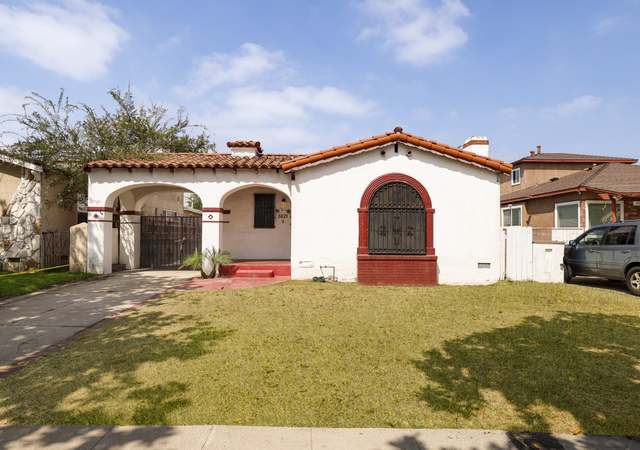
The Golden Opportunity: Navigating Fixer-Upper Homes for Sale in California
California has long been the land of dreams, but for many aspiring homeowners, those dreams come with a staggering price tag. With the median home price in the Golden State frequently doubling the national average, many buyers are turning away from "turn-key" properties and looking toward a more labor-intensive path to homeownership: the fixer-upper.
A fixer-upper—a property that requires repairs, modernization, or even structural reconstruction—offers a unique gateway into the California real estate market. Whether you are a first-time buyer looking for an affordable entry point or an investor seeking "sweat equity," the California fixer-upper market is a high-stakes, high-reward arena.
Why Choose a Fixer-Upper in California?
1. Affordability in a Premium Market
The primary driver for purchasing a fixer-upper is the lower initial purchase price. In cities like Los Angeles, San Diego, or San Jose, a move-in-ready home might be entirely out of reach for a middle-income family. However, a "diamond in the rough" in the same neighborhood might be priced significantly lower, making the mortgage more manageable and the down payment more attainable.
2. Building "Sweat Equity"
In real estate terms, sweat equity is the increase in a property’s value achieved through the owner’s manual labor and improvements. In a rapidly appreciating market like California, the ROI (Return on Investment) for renovations can be substantial. If you buy a home for $600,000, spend $100,000 on smart renovations, and the market value jumps to $850,000, you have effectively "earned" $150,000 in equity that didn’t exist before.
3. Customization and Personalization
When you buy a brand-new or renovated home, you are paying for someone else’s taste. Often, those choices—the tile, the cabinetry, the layout—may not align with your own. Buying a fixer-upper allows you to strip a house down to its bones and rebuild it to your exact specifications, ensuring that your California home is truly a reflection of your lifestyle.
Top Regions for Fixer-Uppers in California
California is a massive state with diverse micro-markets. Where you look for a fixer-upper depends heavily on your budget and your ultimate goals.
The Central Valley (Fresno, Bakersfield, Modesto)
The Central Valley remains one of the most affordable regions in the state. Here, you can still find detached single-family homes in need of TLC for under $400,000. As remote work continues to be a factor, these areas are seeing an influx of buyers from the Bay Area and Los Angeles, making a renovated home here a solid long-term investment.
The Inland Empire (Riverside and San Bernardino)
Located east of Los Angeles, the Inland Empire offers a mix of mid-century ranch homes and older bungalows. These properties often sit on larger lots than their coastal counterparts, providing excellent opportunities for expansions or the addition of Accessory Dwelling Units (ADUs), which are currently a major trend in California real estate.
Sacramento and Northern California
The state capital has seen a surge in popularity. Older neighborhoods like Oak Park or North Sacramento feature historic homes that, when restored, command high prices. Further north, in more rural counties like Shasta or Humboldt, fixer-uppers can be found at bargain prices, though the market for resale is slower.
The Coastal High-End (LA, Orange County, Bay Area)
In these markets, a "fixer-upper" is rarely "cheap." A dilapidated shack in Santa Monica or Palo Alto can still cost well over $1 million. However, the potential profit margins are also the highest here. Investors often target these areas for "flips," knowing that a high-end finish in a desirable school district will attract multiple offers regardless of the interest rate environment.
The Challenges of the California Market
While the rewards are great, California presents unique challenges that can turn a dream project into a financial nightmare if you aren’t prepared.
1. High Cost of Labor and Materials
California has some of the highest labor costs in the United States. Furthermore, strict environmental regulations can drive up the price of materials. When budgeting for a fixer-upper, it is crucial to add a 20% "contingency fund" to cover the inevitable price hikes and unexpected issues.
2. Stringent Building Codes and Permits
California is known for its rigorous building codes, particularly regarding seismic (earthquake) safety and energy efficiency (Title 24). Obtaining permits in cities like San Francisco or Los Angeles can be a bureaucratic marathon, sometimes taking months or even years for major structural changes.
3. Environmental Hazards
Depending on the age and location of the fixer-upper, you may encounter specific California-centric issues:
- Asbestos and Lead Paint: Common in homes built before 1978.
- Termites: A prevalent issue in the California climate that requires professional inspection.
- Wildfire Retrofitting: In many hilly or rural areas, you may be required to use fire-resistant materials for roofing and siding.
Financing Your Fixer-Upper
Most traditional mortgages require a home to be in "habitable" condition. If a kitchen is missing or the roof is caving in, a standard loan may be denied. Fortunately, there are specific loan products designed for fixer-uppers:
- FHA 203(k) Rehab Loan: This federal program allows you to borrow money for both the purchase of the home and the cost of repairs in a single mortgage. It is ideal for primary residents with lower credit scores or smaller down payments.
- Fannie Mae HomeStyle Renovation Mortgage: Similar to the FHA 203(k), but often offers better rates for those with higher credit scores and allows for luxury upgrades like permanent landscaping or a pool.
- Hard Money Loans: Typically used by professional flippers, these are short-term, high-interest loans based on the property’s "after-repair value" (ARV). They are fast to close but risky for the average buyer.
Tips for Success
If you are ready to start hunting for a fixer-upper in California, keep these strategies in mind:
- Location Still Rules: You can fix a house, but you can’t fix a neighborhood. Look for the worst house on the best block. Proximity to good schools, public transit, and tech hubs will always protect your investment.
- Inspect Before You Invest: Never skip a professional home inspection. Beyond the standard report, consider a specialized sewer line inspection and a structural engineering report if you notice foundation cracks.
- Know Your Limits: Be honest about what you can do yourself. Painting, tiling, and basic landscaping are great DIY projects. Electrical, plumbing, and structural walls should almost always be left to licensed California contractors.
- Look for ADU Potential: California law has made it significantly easier to build Accessory Dwelling Units (granny flats). A fixer-upper with a large backyard or a detached garage can be converted into a rental unit, providing a stream of income to help pay off your mortgage.
The Rise of the "Modern Fixer-Upper"
Interestingly, the definition of a fixer-upper is shifting. In today’s market, many buyers are looking for "cosmetic fixers"—homes that are structurally sound but aesthetically dated. These properties, featuring popcorn ceilings, shag carpets, and brass fixtures from the 1980s, offer the best balance of low risk and high reward. They don’t require the permit headaches of a structural overhaul but allow for a massive increase in value through modern paint, luxury vinyl plank flooring, and updated kitchens.
Conclusion
Buying a fixer-upper in California is not for the faint of heart. It requires patience, a healthy budget for the unexpected, and a vision for what a property could be. However, in a state where the housing supply remains chronically low and demand remains high, it is one of the most effective ways to secure a piece of the California dream.
By choosing the right location, securing the appropriate financing, and understanding the local regulatory landscape, you can transform a neglected property into a beautiful home and a powerful financial asset. In the world of California real estate, sometimes the best way to move forward is to find something that needs a little work and build it yourself.