From Open Range to Outdoor Oasis: How to Create the Ultimate Ranch Backyard for Entertaining

The Magic of the Ranch Landscape
Imagine standing on your back porch as the sun begins its slow descent toward the horizon, painting the sky in hues of burnt orange and dusty purple. There is a specific kind of magic that comes with ranch living. Whether you actually have cattle roaming nearby or you simply embrace the ranch-style architectural aesthetic, there is an inherent sense of freedom and opeess that other home styles just can’t match. However, that vastness can often feel a bit intimidating when it comes to design. How do you turn a wide-open expanse into an intimate, functional space for hosting friends and family?
The secret to successful ranch backyard entertaining lies in balancing that “big sky” feeling with cozy, defined “rooms” that invite people to sit down and stay a while. It’s about taking the rugged, natural beauty of the land and refining it just enough to provide comfort without losing its wild heart. In this guide, we are going to walk through the essential steps to transforming your ranch backyard into the ultimate entertaining destination.
SUBMIT YOUR DETAILS FOR
Defining Your Zones: Breaking Down the Big Open
One of the biggest mistakes ranch owners make is treating the entire backyard as one giant space. When you have a lot of land, people tend to wander aimlessly rather than gathering. To create a space that feels intentional, you need to define your zones. Think of your backyard as an open-concept floor plan, but without the walls.
Start by identifying the primary activities you want to host. Do you envision long, multi-course diers under the stars? A lively spot for cocktails and appetizers? Or perhaps a quiet corner for late-night storytelling around a fire? By creating “islands” of activity—a dining area here, a lounge area there—you give your guests a sense of direction. You can use natural transitions like flagstone paths, low-lying stone walls, or even different heights of native grasses to separate these zones visually without blocking the view.
The Rustic Culinary Hub: Designing a Ranch Outdoor Kitchen
In a ranch setting, the kitchen isn’t just a place to cook; it’s the heart of the home. When moving that experience outdoors, you want to maintain a rugged, high-quality feel. Forget the shiny, modern stainless steel setups you see in suburban backyards. For a ranch, you want materials that look like they belong to the earth.
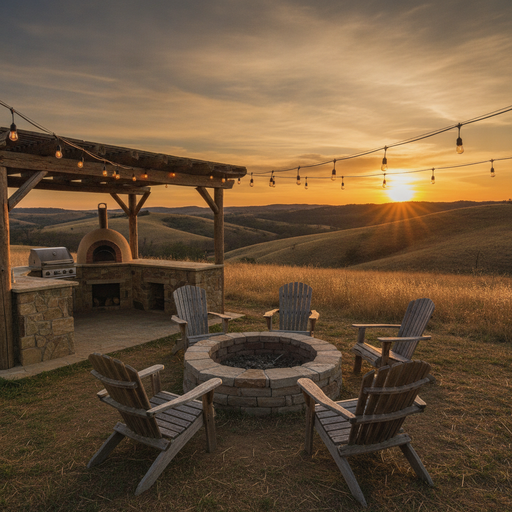
Consider a built-in grill station encased in local fieldstone or reclaimed barn wood. A thick slab of honed granite or even concrete works beautifully for countertops, providing a durable surface that can withstand the elements while maintaining an organic look. If you really want to lean into the ranch lifestyle, consider adding a wood-fired pizza oven or a large smoker. There is something about the smell of wood smoke that immediately makes guests feel at home. To finish the space, add a deep farmhouse sink and a rustic bar area where guests can lean and chat with the cook while sipping on a cold drink.
The Gathering Point: Fire Features and Conversation Pits
If the kitchen is the heart, the fire pit is the soul of the ranch backyard. On a ranch, the nights can get chilly, and there is no better way to extend the evening than by gathering around a roaring fire. When designing your fire feature, think about scale. In a large backyard, a small, portable fire bowl will look lost. You want something with presence.
A sunken fire pit is a fantastic option for ranch properties because it offers a bit of wind protection while creating a dedicated “destination” in the yard. Surround the pit with oversized Adirondack chairs made of heavy timber or even repurposed whiskey barrels. For a more permanent feel, built-in stone seating with plenty of outdoor cushions and throw blankets creates a cozy, amphitheater-like atmosphere. Whether you are roasting s’mores with the kids or sharing a bottle of wine with friends, the fire pit serves as the natural anchor for your entertaining space.
Lighting the Great Outdoors
One of the challenges of ranch living is that when the sun goes down, it gets dark—really dark. While you want to preserve the ability to see the stars, you also don’t want your guests tripping over uneven ground. The key to ranch lighting is “layering.”
Start with overhead string lights—often called “bistro lights”—strung between heavy wooden posts or from the eaves of your house. These provide a soft, festive glow that defines the entertaining area. Next, use low-voltage path lighting to highlight walkways and the edges of your patio. Finally, use uplighting on some of your larger trees or architectural features of the house. This adds depth to the yard and prevents the space outside your immediate circle of light from looking like a black void. Avoid harsh floodlights; you want the atmosphere to feel like a moonlit evening, not a construction site.
Integrating Water Elements: The Ranch-Style Pool
Water adds a cooling, sensory element that is vital for hot summer days. However, a traditional turquoise-blue tiled pool can often look out of place in a rustic ranch setting. Instead, many ranch owners are opting for “stock tank pools” or “natural ponds.”
A stock tank pool—essentially a large galvanized steel tub used for watering livestock—can be filtered and heated just like a regular pool but at a fraction of the cost and with a much more authentic ranch aesthetic. If you prefer something more traditional, consider a “spool” (a small pool) with a dark bottom liner and stone coping that mimics a natural watering hole. The sound of water, perhaps from a simple stone fountain, can also help mask any nearby road noise or simply provide a soothing backdrop for your gatherings.
Furniture and Decor: Comfort Meets Durability
When it comes to ranch backyard decor, think “Texas-sized” comfort. You want furniture that looks substantial. Wrought iron, teak, and heavy cedar are excellent choices for frames. For the upholstery, stick to neutral, earthy tones—beiges, slates, and muted greens—that won’t compete with the natural landscape.
To bring the “storytelling” aspect into your decor, look for pieces with history. An old wagon wheel leaned against a fence, vintage lanterns on the tables, or even weather-worn cowhides used as rugs under a covered porch. These small details tell a story of heritage and hospitality. Don’t forget the practical side of entertaining: have plenty of side tables for drinks and oversized baskets filled with rolled-up blankets for when the desert or mountain air turns crisp.
The Importance of Native Landscaping
Finally, your entertaining space should feel like it grew out of the ground it sits on. This means prioritizing native plants. If you are on a ranch in the Southwest, use agave, yucca, and desert sage. If you are in the Pacific Northwest, lean into ferns and evergreens. Native plants require less water, are more resistant to local pests, and—most importantly—they look right.
Use large planters to bring greenery onto your hardscaped patios. This softens the lines between the “built” environment and the “natural” environment. Planting fragrant herbs like rosemary or lavender near seating areas adds another layer of sensory experience for your guests, as the evening breeze carries the scent across the patio.
Conclusion: The Spirit of Ranch Hospitality
At the end of the day, a ranch backyard isn’t about showing off luxury; it’s about providing a space for coection. It’s about the laughter shared over a long wooden table, the quiet moments watching the stars, and the warmth of a fire on a cool night. By dividing your space into functional zones, using materials that honor the landscape, and focusing on the comfort of your guests, you create more than just a backyard—you create a sanctuary. Your ranch is a place of history and horizon; your entertaining space should be the bridge that allows your loved ones to experience both.